My mission
The table is the point. I build for what happens after it.
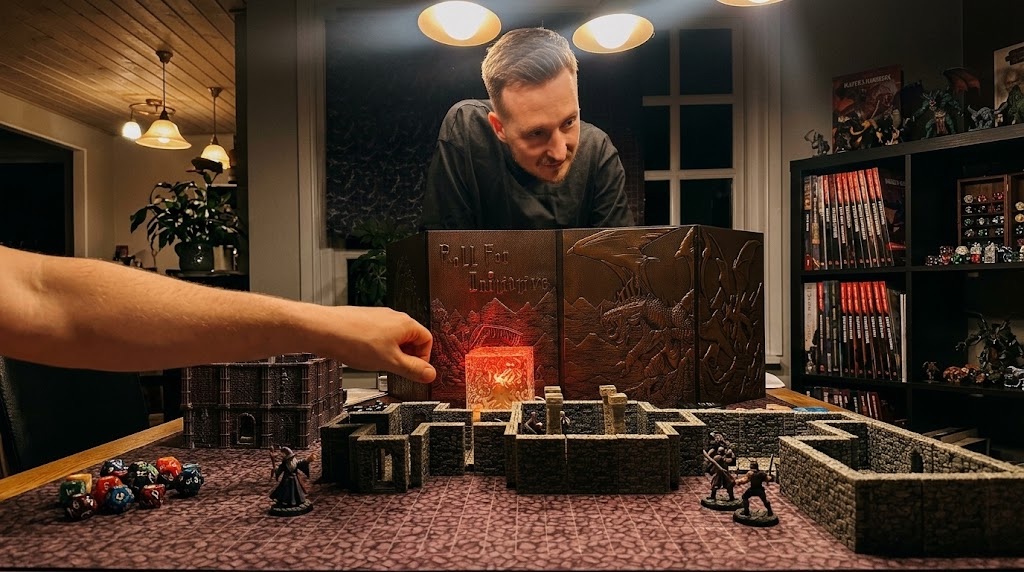
I run a game. It meets when five adults can find the same evening, which is less often than any of us would like, and by the time we sit down again somebody has forgotten the name of the man we swore an oath to. That is the problem I actually have, and it is the one I set out to solve.
I read the same threads you do, and the objection to machines that write games arrives in two different forms. One says a generated adventure takes away the one thing that makes the evening worth clearing a calendar for — five people inventing something together. The other comes from people who tried the tools and found them bad: fluent, confident, and wrong about what happened at their own table. Both are fair, and they are not the same objection.
I agree with the first one completely, and I built around it. A tool that fills your gaps with plausible invention does not help you remember — it overwrites what your table actually made with something smoother, and six months later nobody can tell which parts were theirs. So this one does not write your story. It writes down the one you played, it shows you what it could not verify, and it waits for you.
What I am actually trying to do is narrower and, I think, more useful: make the remembering cheap. The story stays yours. The bookkeeping — who owed whom, which name was sworn to, what was still open three sessions ago — stops costing one person their evening.
For players, that means you can come back after three weeks away and still walk in knowing where you stood. The small details are what make a returning player feel like they belong at the table instead of catching up in silence.
For Masters it is the same problem with a heavier bill. Prep and recall are the tax you pay for every table you run, and it is the reason good Masters cap out at one or two games. For the ones doing this professionally that ceiling is income. If recall is handled, the same person can run more tables, and run them deeper, without turning the hobby into admin.
Some context on where I'm coming from. Building software is my day job and has been for a long time — mostly the kind that has to keep working for a lot of people at once, and lately the kind that acts on its own. I'm not saying that as a credential. I'm saying it because it is exactly why I know what these systems are good at and where they quietly start making things up. A tool that invents a name it never heard isn't a flaw I read about somewhere; it's the failure I work with. Epic's Echo itself is a one-person thing, built in evenings and on weekends, which is why it moves the way it does — slowly, in public, and only where I'm sure.
I care about the table and I care about tools, and I do not think you have to pick. Playing over a screen is not what this hobby was invented for — the evening, the same room, the dice everyone can hear, that is the point. But depth is expensive to reach when everybody half-remembers the last session. Give every player a small assistant for the details and you get more of the good part, not less. That is why I am here.
— Nikita
Creator, Epic's Echo